











Calming the nervous system means reconnecting with your own body. Many people feel a constant sense of tension, even when there’s no immediate cause. The body is in a constant state of alert, and true relaxation seems almost impossible. This is hardly surprising, since our nervous system reacts sensitively to stress, sensory overload, and a lack of breaks—things we’re virtually constantly confronted with in our daily lives these days. The tension that builds up in daily life is stored and held in the body—often without us even noticing. Even in quiet moments, it can be hard to let go.
Your body isn’t working against you. Constant vigilance is a protective mechanism that’s actually meant to help you cope with stress. It’s only when this state persists over a long period of time that a feeling of inner restlessness and exhaustion sets in—one that won’t let go of us. Does this sound familiar? Then it’s time to tackle the problem at its root. By calming your nervous system, you help your body let go of that constant state of alertness, making true relaxation possible again. And how do you do that? We’ll tell you right here, of course!
TL;DR/The most important things for you:
- Calming the nervous system means restoring a sense of security to the body and, step by step, building greater calm, stability, and well-being.
- Goals: To relieve chronic tension and reduce stress, help the body come out of "alert mode," and promote greater emotional balance
- Benefits: better sleep and more energy, less restlessness and irritability, improved concentration, greater calmness and inner balance
- Techniques: Meditation and guided relaxation exercises, gentle yoga for stress relief, calming the nervous system through breathing, acupressure to release tension
- Additional tips: a healthy, nutrient-rich diet, regular exercise, intentional breaks, and relaxing routines as part of your daily life
Content
1. Calming an Overstimulated Nervous System—Why Is It So Important?
2. How can you tell if the nervous system is overloaded?
3. Quickly Calming the Nervous System—First Aid Measures
4. Calming the Nervous System Long-Term - Exercises & Techniques
Calming an Overstimulated Nervous System—Why Is It So Important?
An overstimulated nervous system rarely goes without consequences. When the body is under constant strain, it affects not only how we experience stress but also many aspects of daily life. Sleep becomes more restless, thoughts go round and round in our heads, and even small challenges suddenly seem overwhelmingly large. The nervous system determines how safe or tense we feel—and that’s exactly why it’s so crucial to pay attention to it and not ignore signs of overstimulation.
If this internal state of alertness persists over a longer period of time, the body gradually loses its ability to distinguish between real dangers and everyday stimuli. Everything feels urgent—even when it often isn’t. This constant tension takes a lot of energy and can lead to us feeling disconnected, exhausted, or emotionally overwhelmed. This is often perceived as a personal problem, but it’s actually a completely natural reaction to too many stimuli and too little regulation.
If you want to calm your nervous system, the goal shouldn’t be to suppress symptoms or “force yourself to function,” but rather to lay the foundation for inner peace. Only when the nervous system feels safe can relaxation, focus, and emotional stability return. By addressing this issue, you’re not just treating the surface—you’re tackling the root of the problem.
How can you tell if your nervous system is overloaded?
An overstimulated nervous system rarely manifests itself through a single, clear signal. Most often, it’s a series of small clues that gradually creep into our daily lives. As a result, they’re often ignored for a long time or dismissed as normal side effects of stress. But our bodies are communicating with us—we just need to learn to listen again.
Typical signs may include:
- You feel constantly tense inside, even during quiet moments on the couch or in bed.
- Your breathing is often shallow, and taking deep breaths is difficult for you or feels unfamiliar.
- You tend to react more quickly with irritation, impatience, or emotion—even over minor things.
- Your sleep is restless; you wake up feeling exhausted or have trouble falling asleep.
- Your thoughts are constantly racing, and it's hard to stop them.
- Your body often feels tired, even though you've actually had enough sleep.
- Noises, appointments, or social situations overwhelm you more quickly than they used to.
- You feel like you can never really unwind—even on vacation.
- Your digestive system reacts more sensitively, for example, with discomfort or restlessness.
- Concentration and focus wane because the body remains in a constant state of alert.
These signals are not a sign of weakness or that you’re doing something wrong. They are your nervous system’s way of trying to protect you from becoming further overwhelmed. The sooner you notice these signs, the easier it is to take corrective action. Calming your nervous system doesn’t require iron discipline, but rather calmness, a sense of security, and gentle regulation. Simply becoming aware of these signals is already the first step toward greater inner balance and well-being.


How to Calm the Nervous System Immediately - First Aid Measures
Sometimes, inner restlessness strikes suddenly. Your heart beats faster, your head feels full and heavy, and your body feels tense. In moments like these, your nervous system doesn’t need lengthy routines—it needs quick signals of safety. Even small, deliberate actions can help calm your inner alarm. For example, try the following to soothe your nerves:
- Breathing exercises: Place one hand on your chest and one on your stomach, and breathe in and out slowly and deeply to signal to your body that it’s time to relax. The 4-7-8 breathing technique can also help: first, inhale through your nose for 4 seconds, then hold your breath for 7 seconds, and finally exhale very slowly through your mouth for 8 seconds.
- Progressive Muscle Relaxation: This technique involves briefly tensing specific muscle groups and then consciously releasing them to relieve built-up tension.
- Mindfulness Exercises: The 5-4-3-2-1 method is particularly effective for acute stress and high tension, helping to instill a sense of safety and calm in the nervous system. To do this, name 5 things you can see around you, 4 things you can touch, 3 sounds you can hear, 2 things you can smell, and 1 thing you can taste.
- Water, movement, and fresh air: If possible, take a few sips of water or grab a water bottle and step outside for a few minutes of fresh air. Be sure to walk slowly and consciously take in your surroundings. Just 5 minutes can calm your nervous system and improve your well-being.
These measures aren't a permanent solution, and they won't heal your nervous system overnight. But they can help you switch off for a moment, take a deep breath, and find more inner peace. The more often you use them, the faster your nervous system will respond to them.

How to Calm Your Nervous System Long-Term - Exercises & Techniques
The methods mentioned above for providing immediate relief are helpful, but if you really want to calm your nervous system and find lasting inner peace, you need a long-term approach. It’s very important not to expect major changes overnight. If you expect quick results, you’ll quickly become frustrated, and that puts additional strain on your nervous system—exactly the opposite of what we’re trying to achieve. As the saying goes: Good things take time. After all, your nervous system didn’t become unbalanced overnight. Overload often develops gradually over a long period of time—and you should give your nervous system that same amount of time to regulate itself again. And that’s exactly why we’re presenting some of the best methods and exercises here that can be gently and stress-free integrated into your daily routine.
Calm the Nervous System Through Meditation
Meditation is one of the most effective ways to gently restore balance to an overstimulated nervous system. Through mindful attention and calm breathing, you send a signal to your body that there is no danger. This helps calm the autonomic nervous system, which is responsible for reducing stress and promoting relaxation. With regular practice, you’ll gradually find your way to greater inner peace and serenity.
Guided meditations are especially helpful if you want to calm your frayed nerves. They provide gentle guidance, so it’s often easier to find peace despite constant tension. Your thoughts wander less, and you can focus better on what’s important in the moment: your body and your breathing.
Meditation looks a little different for everyone. If you're new to meditation, the following approaches can help you unwind more easily and find your own path to relaxation:
- Consciously focus your attention on your breath and feel your chest and abdomen rise and fall.
- Mentally wander through your body and mindfully observe each part, without trying to change anything.
- Imagine a peaceful place—such as a forest or a beach—and forget about the world around you.
- Repeat calming words or short mantras to yourself that instill a sense of security (for example, “I am calm and at peace, no matter what is happening around me.”).
- Take a guided relaxation journey that leads you, step by step, into a state of deep calm and true relaxation.
Even just a few minutes a day can make a noticeable difference and help calm your nervous system. What matters here isn’t perfection, but consistency. Over time, your nervous system will learn to emerge from stress mode more quickly and return to a state of calm as its natural state.
Yoga for Stress Relief
Yoga combines gentle movement with mindful breathing, thereby directly affecting the nervous system. Instead of putting the body under further strain through intense workouts, calm flows invite you to let go. Especially when you’re feeling restless, yoga helps you reconnect with your body and release excess stress energy.
Flowing movements and poses that combine stretching and relaxation are particularly soothing and well-suited for anyone who wants to calm their nervous system. They promote blood circulation, relieve muscle tension, and give the mind a break from the constant whirl of thoughts.
Some positions that are particularly well-suited are the following:
- Child's Pose (Balasana): Let your upper body sink forward and give your back and shoulders room to relax completely.
- Cat-Cow Pose (Marjaryasana-Bitilasana): You move your spine in time with your breath and gently release built-up tension.
- Reclining Twist (Supta Matsyendrasana): Gently twist your upper body to the side to help your nervous system relax.
- Corpse Pose (Savasana): Lie still on your back and consciously let go of your entire body.
Yoga for stress relief doesn't have to be difficult. It's not about performance or perfect form, but about relaxation and mindfulness. Even just a few minutes a day can help ease inner restlessness and restore a sense of calm and clarity.
Regulating the Nervous System with Acupressure
Acupressure is a gentle yet effective method for restoring balance to the nervous system. By applying targeted pressure to specific points on the body, tension is released, blood circulation is stimulated, and relaxation is promoted. At the same time, the nervous system receives the signal that it is safe and that the internal state of alarm can be turned off. Especially in cases of inner restlessness, stress, or the feeling of being constantly on edge, acupressure can help the body let go.
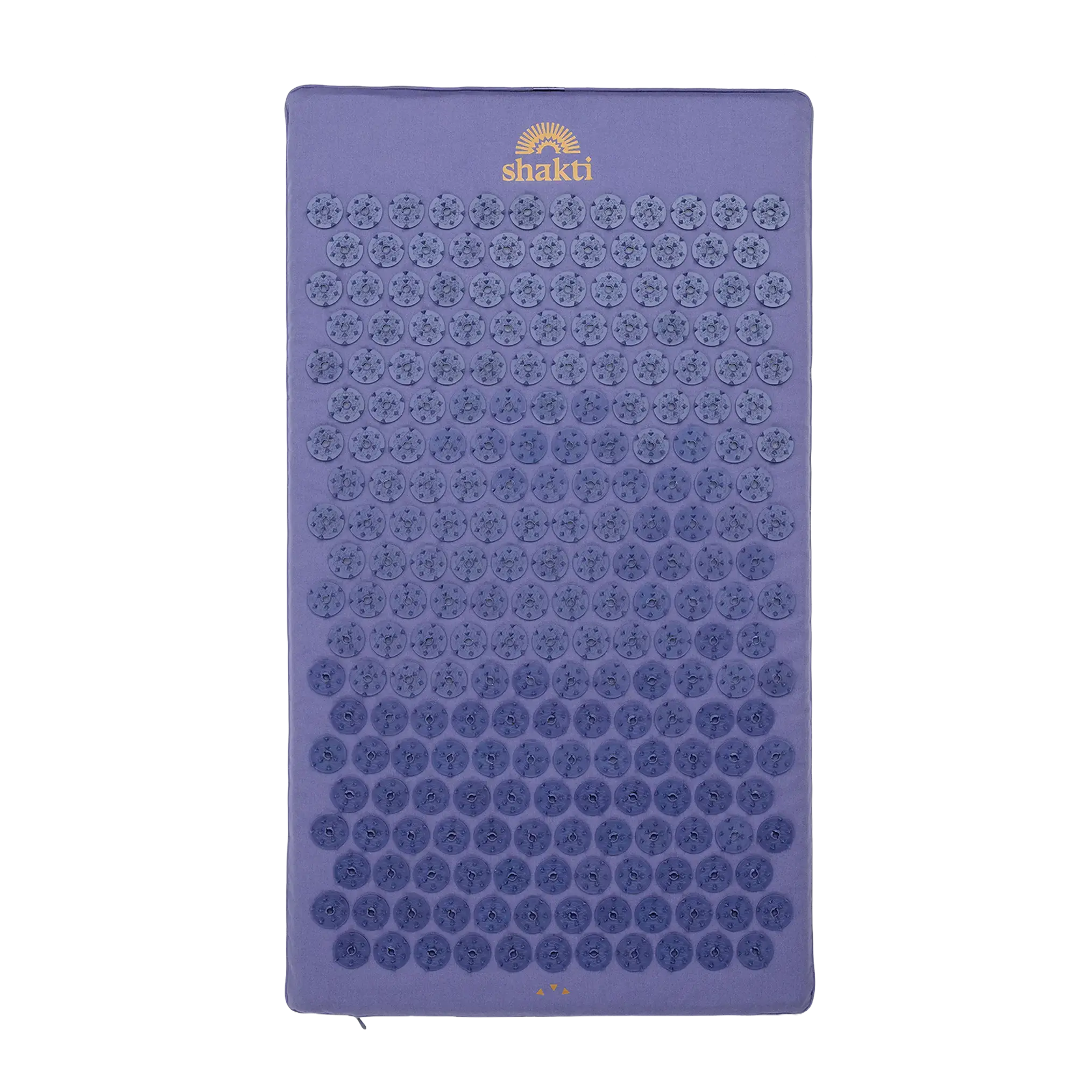
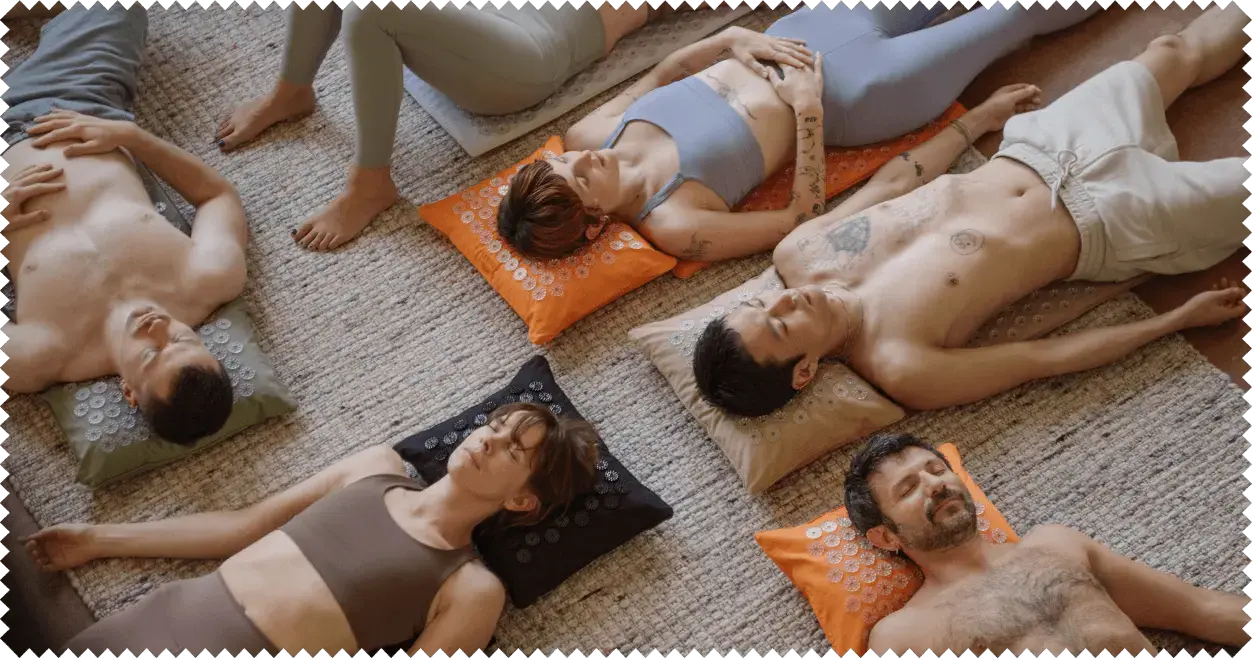
One particularly convenient aspect is that acupressure can be easily incorporated into your daily routine. Acupressure mats like the Shakti Mat allow you to comfortably stimulate your back or neck while lying down, and can also be used on other areas, such as your legs or feet. Even short sessions can help your body release stress and tension, clearing your mind and improving your overall well-being. You can also use tools like the Shakti Meditation Pillow, which lets you combine two relaxation methods at once. The Shakti Headband and the Shakti Ring can be used on the go to calm your nervous system and simply take a deep breath.
The greatest advantage of acupressure—aside from its effectiveness—is its simplicity. It requires no lengthy preparation or special prior knowledge and can be used at any time to create brief moments of relief. However, consistency is key here as well. You don’t have to schedule hours-long sessions on an acupressure mat, but the more regularly you use this method, the more effectively it will help you calm your nervous system and restore your inner peace. Even just 5 minutes can have a significant impact, as long as you remain consistent with your practice.
General Tips for Greater Inner Peace and Balance
As you can see, there’s no single answer to the question, “What calms the nerves?” Instead, there are various methods, exercises, and approaches that complement one another and, together, help create greater inner balance. In addition to specific techniques, however, everyday habits also play a major role when it comes to calming your nerves in the long term. Because, to put it bluntly: If you spend all day in front of a screen, eat nothing but fast food, and hardly get any exercise, you shouldn’t expect that 5 minutes of yoga or meditation in the evening will solve all your problems.
A balanced, nutrient-rich diet provides the body and brain with the energy they need to function reliably and remain resilient. Regular meals, adequate hydration, and foods that are as natural and fresh as possible can help reduce inner restlessness and keep energy levels steady.
Exercise is also a natural stress regulator. Whether it’s going for a walk, doing light exercise, dancing, or biking—even moderate activity reduces stress hormones and helps the nervous system return to a calmer state. Of course, factors such as getting enough sleep, taking intentional breaks, and reducing sensory overload should also not be overlooked when it comes to regulating the nervous system and improving well-being.
We hope you'll start to feel more relaxed and at peace soon. And as you work toward that, don't forget: Every little step counts, and even small changes can have a big, positive impact on your well-being over time.
