











Stress rarely follows your schedule: packed to-do lists, constant availability, your mind already on the next appointment. That’s why short breaks that can be easily incorporated into your daily routine are so helpful. This is exactly where acupressure comes in—and sometimes all it takes is a single point between your thumb and index finger.
The Shakti Calm Clip brings targeted acupressure directly into your everyday life. It works by applying pressure to the LI4 acupressure point—also known as Hegu—one of the most well-known points in traditional acupressure. Once properly positioned, the clip applies continuous pressure to that point without you having to hold it in place. But why LI4, of all points? What happens in the body when this point is stimulated—and what does science say about acupressure, stress, and relaxation?
Key points at a glance:
- The LI4 acupressure point (Hegu) is located between the thumb and index finger and is one of the best-known points in traditional acupressure.
- The " Shakti Calm Clip " applies targeted, even pressure to LI4—without the need to hold it in place—and is ideal for quick acupressure breaks throughout the day.
- Three adjustable sizes and customizable pressure allow you to tailor the fit and intensity to your hand.
- Scientific studies provide interesting insights into the potential effects of acupressure on stress, anxiety, and pain. However, the specific effects of individual acupressure points have not yet been conclusively determined.
Content
1. What is LI4—and why is the Calm Clip located exactly there?
2. What happens in the body during acupressure?
3. What does science say about acupressure for stress and tension?
5. How to Use the " Shakti Calm Clip " Correctly
6. How long should you wear the Calm Clip?
7. Intense is good. Pain is not.
8. A quick stop for a short break
What is LI4—and why is the Calm Clip located exactly there?
LI4 stands for “Large Intestine 4,” often referred to as the large intestine 4 in German. Its traditional Chinese name, Hegu, can be roughly translated as “valley junction”—a rather fitting name for a point located between the thumb and index finger.
Traditional Meaning
In Traditional Chinese Medicine, LI4 is part of the Large Intestine Meridian and is one of the best-known acupressure points. Traditionally, it is stimulated to address tension and discomfort in the head and face—in other words, precisely when the body and mind have trouble finding peace. This traditional connection to tension and relaxation is also the reason why LI4 is the focus of the Calm Clip.
Anatomical Location
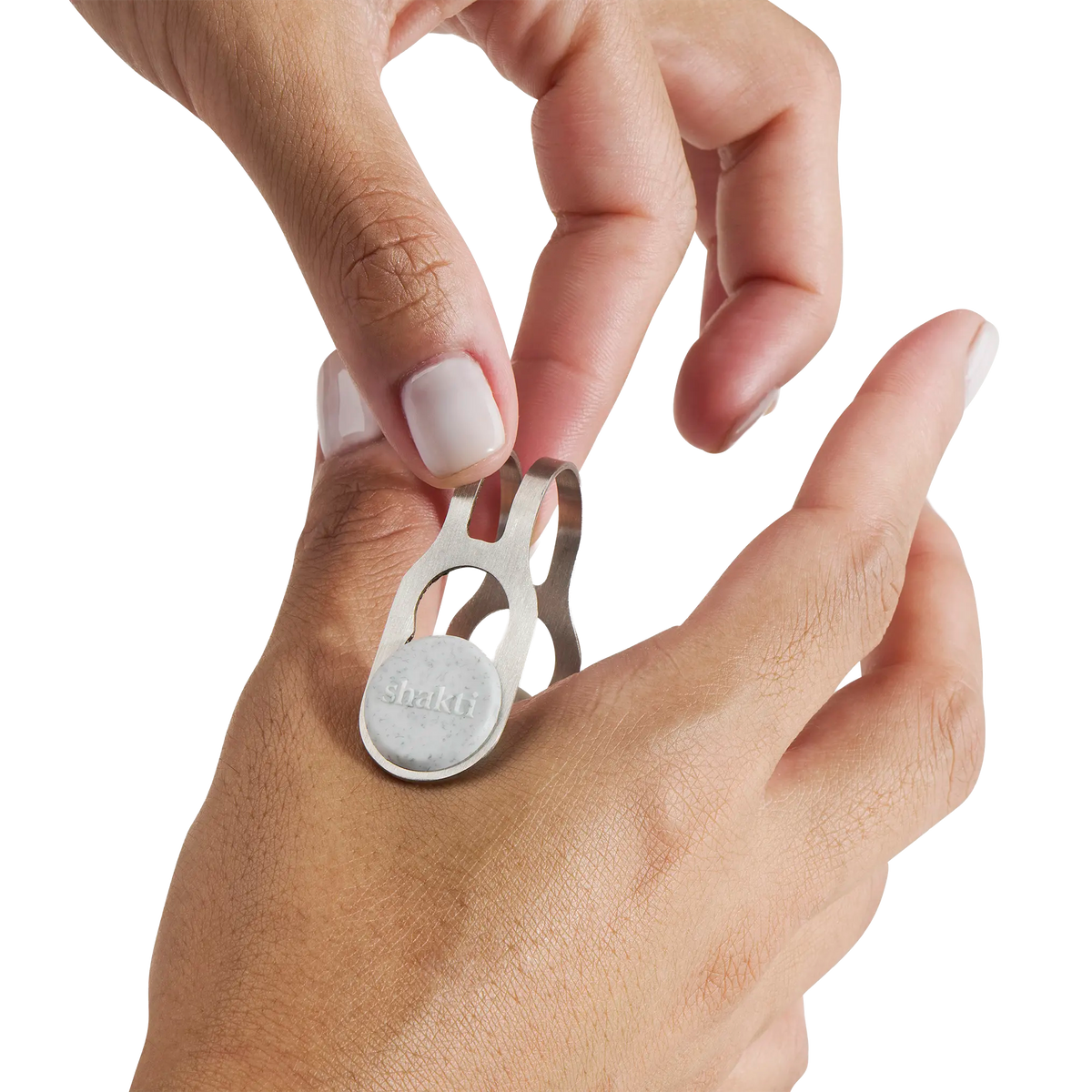
From an anatomical perspective, LI4 is located on the back of the hand between the first and second metacarpal bones. This is exactly where the Calm Clip applies pressure with its opposing acupressure points, generating targeted, even pressure—continuously and without the need to hold it in place.
What happens in the body during acupressure?
Traditional Chinese Medicine explains the effects of acupressure through meridians and the flow of qi, or life energy. Modern science views the practice from a different perspective.
When pressure is applied to the skin and underlying tissue, this mechanical stimulus activates sensory receptors and nerve fibers. The signals are transmitted via the nervous system and processed in the brain. The role that specific acupressure points play in this process—and just how specific their effects actually are—has not yet been conclusively established by science.
LI4 has also been studied using imaging techniques. Small fMRI studies have observed changes in the activity of various brain regions during stimulation, including areas involved in processing sensory stimuli.
It is important to note that these studies focused on acupuncture or electroacupuncture—not on the Calm Clip or continuous mechanical pressure. While they provide interesting insights into neurophysiological responses, they do not constitute evidence of a specific therapeutic effect of the clip.
What does science say about acupressure for stress and tension?
This is where it gets interesting. Acupressure has now been studied in numerous clinical trials—including those related to pain, stress, and anxiety. Anyone who spends a few minutes each day applying gentle pressure is directly investing in a whole new quality of life.
- Meta-analyses on anxiety: For example, a meta-analysis of 27 studies found an overall reduction in anxiety scores following acupressure. At the same time, the studies differed significantly in terms of participants, methods, and quality. The results are therefore interesting but should be interpreted with caution.
- Situational anxiety: Previous studies have also shown positive results for situational anxiety, such as anxiety related to medical procedures. However, those studies primarily examined other acupressure points. Therefore, it cannot be automatically concluded that LI4 has the same effect.
- LI4 and Pain Research: LI4 itself has also been the subject of scientific study, particularly in relation to pain. For example, a systematic review of LI4 and SP6 acupressure during childbirth found evidence of lower pain scores in the short term following LI4 acupressure. At the same time, the researchers emphasized that further studies are needed.
- A Nervous System Reset for Everyday Life: The Fair Summary: Acupressure is by no means an unexplored field of science, and there is interesting evidence suggesting potential effects. However, the evidence varies depending on the area of application, and research on acupressure in general does not automatically prove the effectiveness of LI4 or the Shakti Calm Clip. The Calm Clip is therefore intended as a wellness and acupressure product—not as a medical treatment or a substitute for one.

Why a Calm Clip?
Of course, you can also stimulate the LI4 point with your thumb or finger. There’s just one small catch: one hand is busy pressing down on the other—and maintaining even pressure over a longer period of time. That’s exactly what the Shakti Calm Clip does. Its two acupressure points are positioned opposite each other and apply continuous pressure to the desired spot. Once it’s properly positioned, you don’t have to hold it in place.
The name says it all: This clip turns the traditional stimulation of LI4 into a simple moment of calm in your everyday life—while reading, traveling, taking a break, or at your desk.
1. Three sizes and a flexible fit
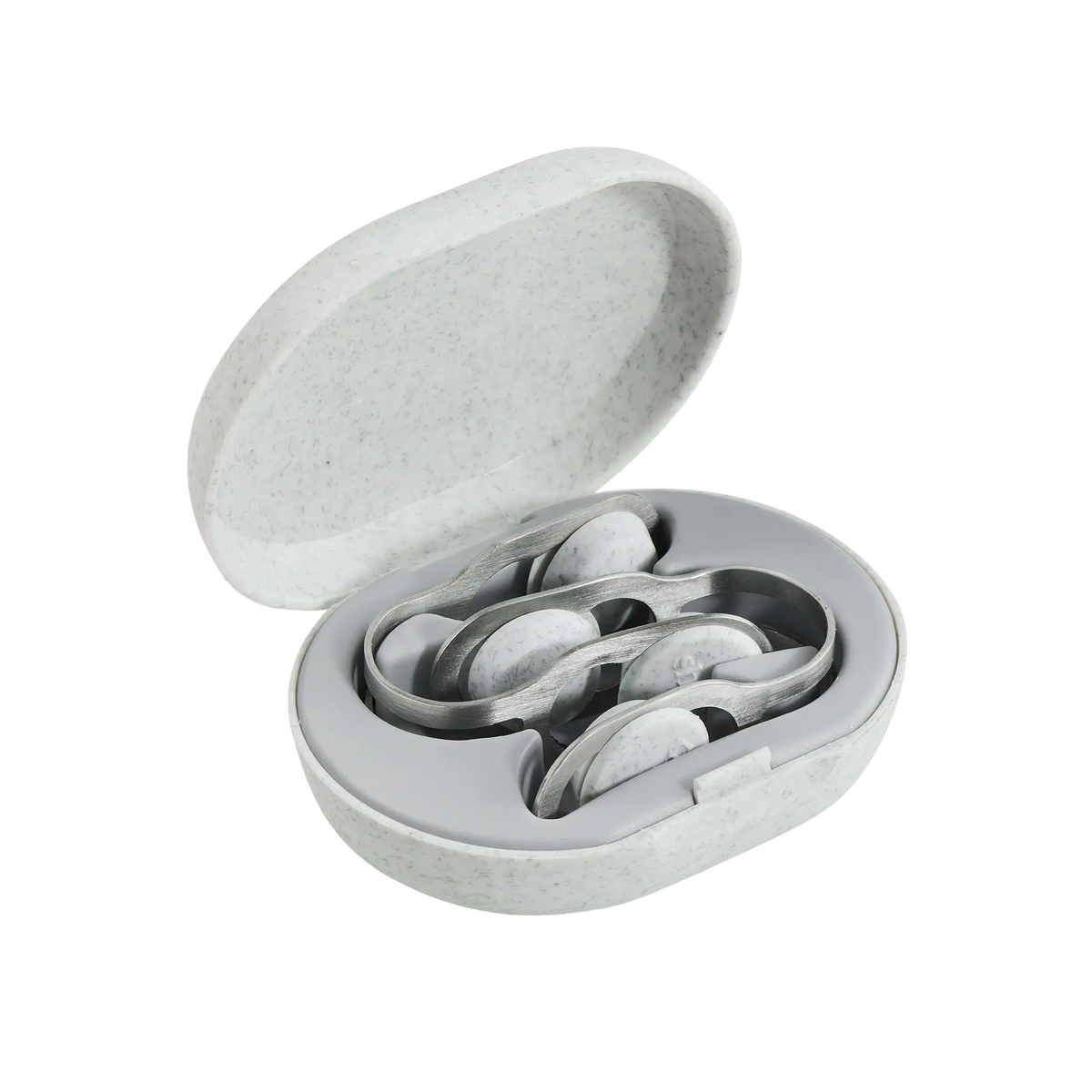
Three sizes—Small, Medium, and Large—and a flexible metal frame let you customize the fit and pressure to suit your hand. The set includes two clips that you can use individually or together on both hands. Small enough to fit in your pocket. Ready for when your day gets a little too loud again.
2. How to Use the " Shakti Calm Clip " Correctly
First, find the correct position: Gently press your thumb and index finger together and feel for the highest point of the muscle bulge between them. Then relax your hand and slide the Calm Clip onto your hand, starting from the back of your hand. The acupressure tip should rest directly on the pressure-sensitive spot.
Now set the correct size: If the Shakti logo is horizontal, the mechanism is locked. Turn the button 90 degrees until the logo is vertical, select Small, Medium, or Large, and then lock it again.
3. The Right Pressure
The pressure should be clearly noticeable—but not painful. If it’s too intense, you can gently pull the metal frame apart. If you want more pressure, you can gently squeeze the frame back to its original factory setting. You shouldn’t increase the pressure beyond that. And don’t worry if the metal frame doesn’t rest completely on your hand: a small gap is normal. The acupressure points are meant to apply the pressure—not the frame.
4. How long should you wear the Calm Clip?
There’s no such thing as a “perfect” amount of time. Start with a few minutes and see how the pressure feels to you. If it feels comfortable, you can gradually increase the duration to up to 30 minutes—or even longer, depending on how you feel.
- As part of your daily routine: You can wear the Calm Clip while you're typing, reading, or drinking your tea. Your non-dominant hand, for example, is a good choice for this.
- As a deliberate break: Or you can do exactly the opposite: Relax your hand, let your shoulders drop, take a few calm breaths, and notice the tension—instead of casually scrolling through your next feed.
- Dual-sided use: With two Calm Clips, you can stimulate both hands at the same time.
5. Intense is good. Pain is not.
Anyone who has ever lain on a Shakti Mat knows the difference between intense stimulation and real pain. The same applies to the Calm Clip. Firm pressure is intended; sharp pain, numbness, tingling, discoloration, or swelling are not. If any of these occur, remove the clip immediately. Also, do not use it on injured, irritated, inflamed, or infected skin.
- Medical Information: If you have circulatory problems, reduced sensation in your hands, neuropathy, blood clotting disorders, or are taking blood-thinning medications, you should consult a doctor before use.
- Pregnancy: There is one important thing you should know about LI4: This point is traditionally associated with inducing labor and has also been studied in clinical trials during childbirth. Therefore, if you are pregnant or trying to conceive, you should only use the Calm Clip after consulting with a healthcare professional.

Acupressure: A Natural Boost for Your Everyday Life
For thousands of years, both acupressure and intentional rest breaks have been among the most effective methods for promoting deep regeneration in the body.
A little spot for a quick break
The Calm Clip takes the complexity out of acupressure. That’s exactly the idea. LI4 has been one of the best-known acupressure points on the hand for centuries. Modern research offers interesting insights into what can happen in the body during acupressure—even if not all mechanisms and the specific effects of individual points have been conclusively clarified yet. The Shakti Calm Clip turns this into something quite simple: targeted pressure that you can easily incorporate into your daily routine.
Everyday Uses
While you need to stay focused during active workouts, the Shakti Calm Clip takes most of the work off your hands. At your desk, while traveling, before your Shakti session, or simply when you want to step away from your daily routine for a few minutes: Clip it on, relax your hand, feel the pressure, and let go. Tension and stress fade into the background, and your body finds its way back to a soothing state of calm.
Conclusion: How to Find Inner Peace Through Simple Acupressure
In a world that seems to be spinning faster and faster, a source of inner calm is worth its weight in gold. But you don’t have to completely turn your life upside down to feel more at peace again. The key lies in small, regular sessions that allow you to stimulate the LI4 point: Try the “ Shakti Calm Clip ,” combine it as you see fit with breathing exercises or breaks in your daily routine, and figure out what feels best for you. Whether it’s a quick session at your desk, a few mindful breaths on the go, or a relaxing evening routine—every little break shows your body that it’s safe. Give your system the attention it deserves, and find your way back to your natural strength and balance, step by step.
